16 October 2018

Light, Surface and Colour: Sauerbier House A.i.R. Practice Post #1

Sauerbier House


Sauerbier House consits of two dedicated artist studios and two gallery spaces for showing AiR work. I have been allocated the Riverside Studio. It is a four metre square studio with good daylight and electric light, four large panels for working on tables and chairs. The facilities are really good with key access for evening and weekend working. Sauerbier House is 50 metres from the Onkarparinga / Ngangkiparingga (women’s) river. The landscape is formed of bi-cultural environment (Aboriginal and European) reflected in place, land management and agricultural practice. The river and coastline forms the main focus for the AiR, and engagement with  cultural, social and environmental aspects of this complex and culturally significant coastal area influence my conceptual and perceptual thinking. Whilst my response is largely sensory, objective and visual, the subjective contexts of sustainability, climate change and history are very apparent. In these terms the idea of 'scape' has been developed as forming visual responses to the place seen and in the case of my project, recalled.


I was able to bring some art materials with me including 19 new canvases fitting into a black suitcase (reference #luggage art) that caused much discussion at Adelaide airport immigration control! The suitcase with brushes and some paints arrived into Sauerbier House on Friday 5th October, also picking up a couple of larger canvases from the Colonnades at Noarlunga Centre. On the previous day I took the train to downtown Adelaide to visit Premier Arts suppliers in King William Street to stock up on watecolour paper (Canson 200g) Chroma A2 and Jo Jonas acrylic paint, drawing materials (charcoal, chalk and compressed charcoal) and large A1 paper that usefully folded over in the black suitcase. After a brief but highly productive visit to the Art Gallery of South Australia, I was basically all set to begin work.


My aim (as in the previous post) is to explore Place. In approaching the new landscape, sensory, perceptive and intellectual responses will contrast with a biographical notion of place in relation to home territory, defined as ‘scapes’.


First sketchbook studies 4.10.18


Initially in the first two weeks, I plan to work with drawing materials, pencils, charcoal and chalks in sketchbooks and on paper to research initial visual ideas found whilst exploring the area. The visual dynamic of the shape of the river will almost inevitably form the drawn element of the initial studies. being able to easily walk to the coastline and further down stream on both sides of the large curving river meant ample opportunity for drawing. The small sketchbook I bought with me and the larger A3 sketchbook bought in Noarlunga with a shiny flat surface to the paper that works really well with the compressed charcoal pencil, proved very useful in getting to know this place.


A3 sketchbook studies 6.10.18


The process of drawing here is to familiarise myself visually with the place. The time taken walking and drawing, looking and searching for an image is all part of the digesting of the subject. In getting to know the place, the elements and characteristics infiltrate onto ones perceptive memory defining blueprints of information, stored for later studio development.


A3 sketchbook studies 6.10.18

A3 sketchbook studies 6.10.18


For this project, that in many ways is very different from my usual methodology; this initial information gathering stage is crucial. I am also using lens based media as I find photographs very useful in recording quickly detail and vista that otherwise might well be forgotten. Lens based media is particularly good for recording colour configuration. My direction is that through process, the research will be used in the studio to create a series of acrylic paintings reflecting on the visual identity of the place: facets transformed into pictorial compositions of colour, the aesthetics of ‘scape’.


A3 sketchbook studies 6.10.18

In these early studies, recognisable aspects of the location, townscape, estuary and landscape are naturally evident. As I search for a developed abstraction through process, form will simplify, trying to locate the essence of the place. 


Supported by an International Opportunities Fund Grant from Wales Arts International


08 October 2018

Light, Surface and Colour: Sauerbier House and Llanfairfechan. Proposal and Planning


Sauerbier House Cultural Exchange Program
Light, Surface and Colour: Sauerbier House and Llanfairfechan.
Proposal and Planning.


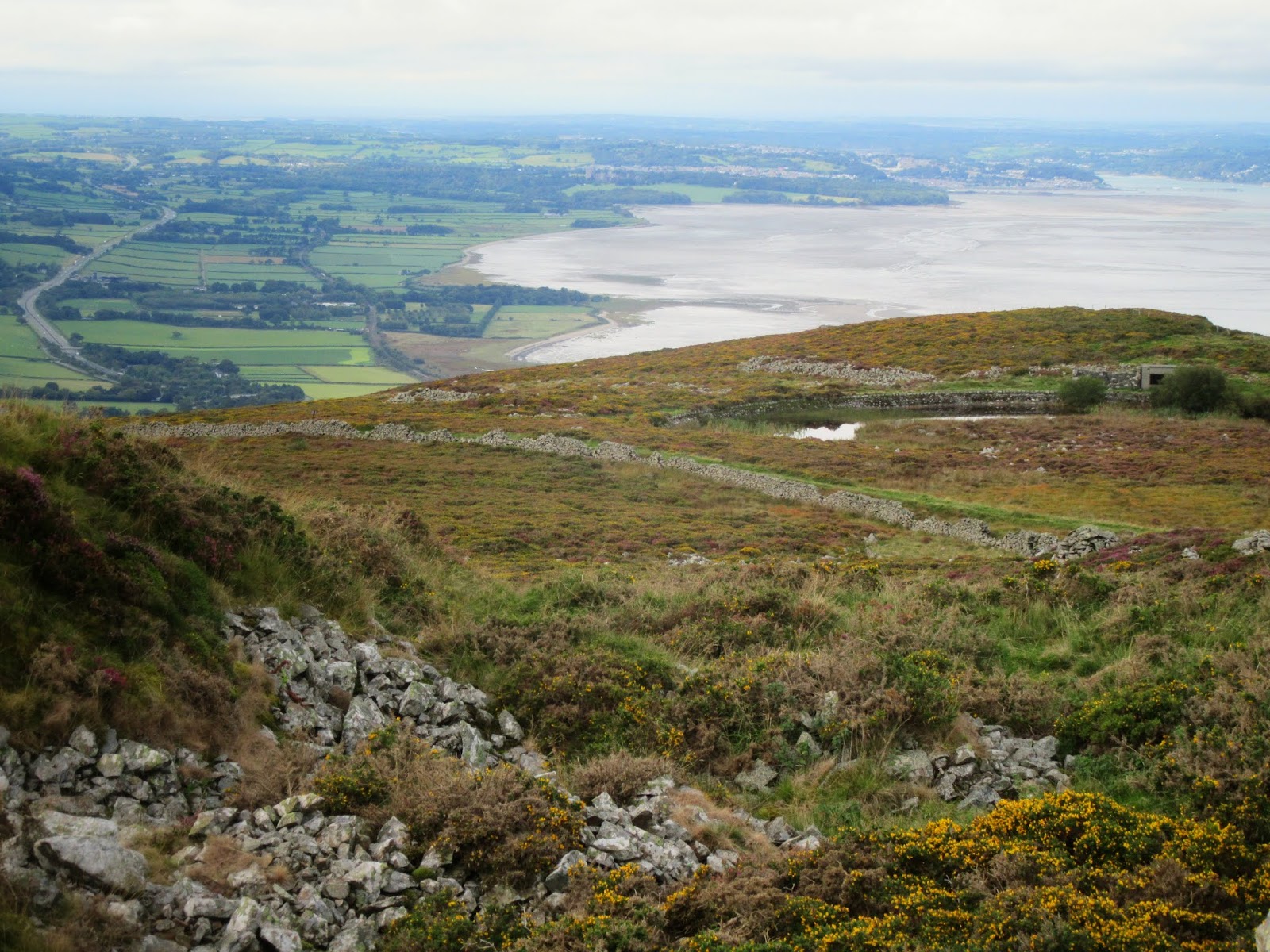
Looking south towards Bangor from Chawrel Lllanfairfechan Quarry


RATIONALE
The Sauerbier House Artist in Residence (AiR) Cultural Exchange is facilitated by the city of Onkaparinga Council, in the state of South Eastern Australia. It has been in place since 2015 with two artists resident each session. It will be my first long term residency at 12 weeks and have been allocated the Lounge Gallery for the exhibition of work completed during the AiR. The exhibition will run until the end of January 2019. Having participated in many Residency, Plein-Air and Symposium events for short durations of one or two weeks, this AiR is a more in depth residency with production, engagement and presentation central to making new work in situ whilst engaging with the community of Onkarparinga.

The rationale for applying and attending the AiR is to explore the landscape and estuary/river location of Ngangkiparingga (women’s river) towards the Willunga Basin and McLaren Vale. The      landscape is formed of bi-cultural environment (Aboriginal and European) reflected in place, land management and agricultural practice. Place therefore, is the central theme to my planned AiR work. In approaching the new landscape, sensory, perceptive and intellectual responses will contrast with a biographical notion of place in relation to home territory, defined as ‘scapes’.
                
Central to the response of the new landscape is the reflection on the Welsh context that has developed through initial research for the planned work. There is Welsh heritage at Sauerbier House with the original owner of Emily Gwendoline Sauerbier (nee Davies) and the place from which Sauerbier house was originally named, Llanfairfechan. I plan to explore the landscape around Noarlunga and make contrasting works with research undertaken at Llanfairfechan before departure.

Objective 1: Portfolio Outcome. Develop a series of visual art work that seeks to convey a sense of the place through graphic, plastic and expressive 2D colour based paintings and drawings. I propose a series of drawings and 150 small paintings that through location and studio practice will attempt to create an aesthetic impression of place, seen and recalled.       

Preliminary studies reflecting on upcoming project August Moreia Studio

Objective 2: Process. The first stage is to meet with I project Merched Chawel (see Background and Context). I will make an exploratory research visit to chawrel Llanfairfechan. This research and that made on site in the first two weeks will be used to start work on the contrasting landscapes iaround Onkaparinga and of chawrel Llanfairfechan. 

Objective 3: Dissemination. As part of the engagement with the community of Onkaparinga, the studio door will remain open throughout the opening times for drop in visitors. For workshops, I will hold ‘Location: Landscape into Abstraction’ workshops.

Objective 4: Explore collaborative work as part of the residency and exhibition. My fellow AiR is  Tristan Louth Robins, a sound artist based in Adelaide and who explores landscape through sonic media. I will be staying on the projct loaction of artist Gavin Malone, curator of Lot 50-Kanyanyapilla, McLaren Vale. This is a bi-cultural ecological and cultural regeneration   project located   12 kilometres from Sauerbier House. During a short residential stay on the land (in the Shed) drawings and a video diary will be made particularly of the Maslin Swamp basin area to reference issues of water in the region. Malone's work uses local sourced materials (seed, sand and grass for example).

Objective 5: Impact on my practice in Wales. a) Practice Blog. The blog diary will track process and development during the residency. It will be shared as a blog link project with Merched Chawrel (see Background and Context). The thematic concerns of aesthetics being mediated by place will define the AiR exhibition and :
b) Exhibition at Royal Cambrian Academy. The work from Sauerbier House AiR will form a part of my solo exhibition planned for the RCA in March 2019. As the exhibition is scheduled soon after my return from Australia, the work made will feature prominently both in actual and referenced form. The creative documentary aspect of my AiR work will include a video exploring ‘scape’ the cultural and geographical features of the place edited from footage whilst resident in Noarlunga and particularly, Mclaren Vale.

BACKGROUND AND CONTEXT
My initial proposal focused on the exploration of the landscape and estuary/river location of Ngangkiparingga (Women’s River) and reflecting on the contrast of my home studio location in North Wales that is also a coastal area. Contrasting places, each with different cultures and environments would underpin my approach to looking and experiencing the place. 

However, further research into Sauerbier House has revealed a connection with North Wales. 
Quote from Sauerbier information:
"This Spanish slate which was previously on the roof of the Port Noarlunga Lifesaving Club and was salvaged by local Welshman Ken Davies and gifted it to Lisa fHarms (whilst she was the first Artist/Writer in Residence Sauerbier House 2015-2016). She then passed some of this slate to    along with this information. Ken Davies is a recent recipient of a State Heritage.  award for his master-craftsman skills which were presented at Sauerbier House August 2016. Harms connects the Welsh heritage of Emily Gwendoline Sauerbier (nee Davies) with the place for which Sauerbier house.  was named Llanfairfechan (a seaside village not so far from Bangor slate quarry in Wales).
Llanfairfechan was the previous name of Sauerbier House."

Research site visit  with Jwls Williams 17.9.18 Chawrel llanfairfechan Quarry

Research site visit  with Jwls Williams 17.9.18 Chawrel llanfairfechan Quarry

Research site visit  with Jwls Williams 17.9.18 Chawrel llanfairfechan Quarry

Research site visit  with Jwls Williams 17.9.18 Chawrel llanfairfechan Quarry

Research site visit  with Jwls Williams 17.9.18 Chawrel llanfairfechan Quarry


Research site visit  with Jwls Williams 17.9.18 Chawrel llanfairfechan Quarry


Therefore, my focus has now shifted to explore a bit busy the links with Llanfairfechan. Merched Chwarel is a collaboration between artists Marged Pendrell, Jwls Williams, Lisa Hudson and Lindsey Colbourne and they are now working on a series of five exhibitions for 2019. One question they are considering is 'How are our aesthetics, identity and connection to place, culture and language are mediated by the quarries?' I intend to carry out a field trip to the quarry at Llanfaifechan with Jwls Williams (artist and member of Merched Chawrel project (see above Objective 5 and attachment project document)). Williams is familiar with the quarry through family history and has made 2D and video works from the Quarry. This research will be carried forward as source material for work at Sauerbier House AiR.

Artist Jwls Williams at Chawrel llanfairfechan Quarry 17.9.18
I have previously briefly visited South Eastern Australia in 2009 as part of the Le Chiele Irish - Welsh printmaking exchange that toured the State under the curation of Veronica Calarco (now at Stiwdio Maelor). Stiwdio Maelor in Corris was created by Calarco and is an established Residency program for international and regional artists and writers.

I have just returmed form Garbatka Letnisko Plenar in Poland (see previous post) where I was the Wales based representative (as defined in the catalogue). The role as ambassador for Wales seems to have become a feature of international projects that I have been involved with and one that I am comfortable with. Effective communication and follow up is evidenced by Residencies that further Wales based artists have attended subsequent to initial engagement.

As a member of the group ICAW I have developed and attended many projects in Europe and beyond, most recently in Poland July 2018. Sauerbier House AiR will provide a valuable opportunity to further the creative links between Wales and Australia, at least in providing opportunity for further Wales based artists to participate in future AiR and to encourage Australian artist to participate in Wales based international events and residencies for example Siwdio Maelor for visual artists and writers. (see letter of support ICAW).       

ACTIVITY
The residency is for 12 weeks and during this time I will make a portfolio of visual art for exhibition by week 11 of the residency. I have been allocated the Lounge Gallery in Sauerbier House. The exhibition is from 15.12.18 to 26.1.19.
Preliminary Study acrylic on paper August 2018


Initially in the first two weeks, I will work with drawing materials, pencils, charcoal and chalks in sketchbooks and on paper to research initial visual ideas found whilst exploring the area. Initial studies will be from the Ngangkiparri (Onkaparinga) river and tracing it back to Mount Torrens in the Adelaide hills. The visual dynamic of the shape of the river will form the drawn element of the initial studies. Also using lens based media, the research will then be used in the studio to create a series of acrylic paintings reflecting on the visual identity of the place, facets transformed into pictorial compositions of colour, the aesthetics of ‘scape’. At times, recognisable aspects of the location, townscape, estuary and landscape will be evident. Through location and studio practice I will attempt to create an impression of place, seen and recalled.
Preliminary Studies Moreia Studio August 2018


I will be staying for one week 29.10.18 to 5.11.18 at Lot 50-Kanyanyapilla, Mclaren Vale. Gavin Malone, artist and cultural geographer, acquired Lot 50 in February 2015 for a bi-cultural ecological and cultural regeneration project, along with some agricultural production. The land is 40 acres in size with the majority of it being a registered Aboriginal heritage site under the South Australian Aboriginal Heritage Act. The Lot 50 plan adopts a bi-cultural, Aboriginal and non-Aboriginal approach to land management.  The video work of my time at Mclaren Vale and the wider Noarlunga area will form a creative documentary exploring place and 'scape'.
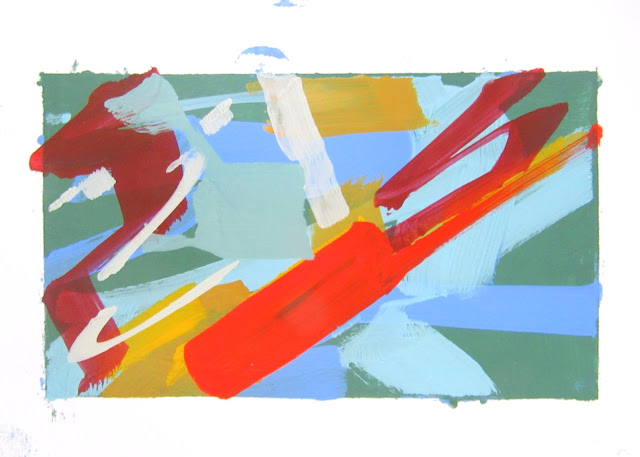
Preliminary Study acrylic on paper August 2018
The work planned in the residency is over and above my usual practice. The subjective connections with Wales are to the fore of the enquiry here with the contexts of Llanfairefchen, slate and history of Sauerbier House providing scope for multiple methodologies to develop my portfolio with a high level of original location based exploratory practice.


Supported by an International Opportunities Fund Grant from Wales Arts International


16 September 2018

11 Miedzynarodowy Plenar, Puszcze Kozienicka + Garbatka-Letnisko + 11th International Plein Air, Kozienice Forest


Garbatka-Letnisko 11th International Plein Air Painting and Sculpture Symposium takes place every year for two weeks. I found this was ample time to experience the culture, get to know the place and make required work for display on the final day.  


The brief was straight forward. It was desired that works made some reference to the place if possible. Materials were provided and I chose the canvases, some drawing paper and four oil colours that were on offer if oil paint was chosen. I liked this limitation. The colours available were Red (Vermilion), Blue (Ultramarine), Yellow (Lemon) and White. A new set of brushes, oil and turpentine and we were set to go.


I was struck by the simplicity of the new church built in 2000 at Garbatka-Letnisko. It had a strong vertical presence with four square columns and the entrance had an intriguing space. I made drawings here and back in the studio abstracted these in further studies before slightly unusually for me, drawing a design onto the canvas.


The colours specifically were Ultramarine, Vermilion Red and a Light Lemon Yellow plus White. They were good quality, mixing well and I did not use any turpentine or oil. Characteristically, one mixed colour was applied to each section of the two paintings without mixing on the canvas. Finding a chromatic grey was intriguing, the yellow green and violet mixing making quite noticeably vibrant tertiary colours, whilst the starred red and blue making a near black for tonally darkest elements. I wanted the church to remain recognisable, yet with compositional abstraction moved elements to make for an all over design.


Four Colours Red 2018

Each painting had a thematic role. The main colour would be Red in one and the other Yellow. Hence the titles. Four Colours Red and Four Colours Yellow.


Four Colours Yellow 2018


02 July 2018

INCONTRO: Project Post 4: Object


I must emphasise that the painting remains floor based throughout. In this post written whilst creating the work (ie mid process - as are all the posts actually) - I want to consider the object. The brief described making objects for ten capsules. My objects are ten elements each containing a grid of 16 tiles, making a total of 160 square paintings with each element planned to be in a square grid on the floor or horizontal surface. This structure and format is largely to do with object rather than painting support. The ensuing issues of grid and organisation again imply an objective agenda. Painting as object; object as painting.


The progress of each of the elements can be viewed at INCONTRO. The completed elements are the final ten.


The progress is practice driven and in defining a conceptual start point, the actual outcome of each element object was of course unpredictable. In reviewing the 10 elements, and now with the task to remove each 160 painting tiles from the backing paper and arrange in a defined grid on the floor, removing the tiles from the backing would actually lose something from each of the objects. The way the paint has been applied to cover the sides of each tile has meant an over robust base colour around each and on the backing paper. Moreover, test marks and casual brush mark are around, as is the configuration of each element as it was painted. In other words, each tile is relational to the other on each element/object with regard to the painting process because the tiles are stuck down by the original base layer paint. Although each element has been worked on from all sides the tiles are and have been fixed on the backing paper from the outset. Therefore, I have resolved to leave each element on the rough backing paper and they will remain as wall based works.


06 June 2018

INCONTRO Project Post 3: Involuntary Action


The application of colour begins. 160 separate components for each of the ten elements of the series. There is a diagrammatic way of working here. Each of the elements is laid on a sheet, on the floor and painting process remains floor based throughout.


The diagrammatic feel to the potential layout is an issue. I recall Frank Stella's comment on the diagram: "A diagram is not a painting; it’s as simple as that. I can make a painting from a diagram, but can you? Can the public? It can just remain a diagram if that’s all I do, or if it’s a verbalisation it can just remain a verbalisation". (1)

The grid or diagrammatic structure is a rigorous compositional organisation. Within each element the the multiplicity of tiles and format (rational axis) defines a heightened spatial expansion. The handling of the painting separates the series from the purely diagrammatic; the structure of permeation.


The painting of each tile seems to be coherent. Marks, lines, gestures flow across the surfaces as if in a unified code. 'As if', and 'seem' are essential terminologies here, fundamental to painting itself.  Colour seems to be the structure; it is as if the deep orange stands out against the grey. 

Gerhard Richter: "The red in Picture 300, 1971, in the Bonn Retrospective Raisonne, had three basic colours as wells steps between, 'Zwischenschritte', bluer blue, greener yellow, whiter yellow etc; in all there were 180 squares. They were somewhat re tainted.
Peter Gidal: "Were?"
Gerhard Richter: "Seemed". (2)


Fact is illusionary in these elements and in my work. It probably is in all art. Peter Gidal adds as a footnote: 'Perception and knowledge do not coincide ; any tentative relation is not automatic, it needs to be made'. (3)

But, my painting process is undoubtedly to do with colour and to make the painting look compelling. 16 components for each element have to work across and with each other within their base colour context. Some darker, some lighter, some fluorescent. Painted mark, shape and form allude to a horizontal table/floor view. We look down on the shape and trace across a surface.


I am also thinking here about the concept of involuntary representation. In 1932, Brassai published 'Involuntary Sculptures' (4). Here, he featured everyday items, distorted then photographed close up and in strong light to render unrecognisable but as a new sculptural form. In each element of my work, there is an involuntary allusion to the recollection of configurations of a mosaic design. It is a kind of directional geometry. Involuntary as maybe, with my work, the start point must be distortion itself. Configurations of recall. Moreover, the result of the current process remains the language of colour, shape and line.


(1) Lippard, Lucy R (ed) . Questions to Stella and Judd. Interview by Bruce Glaser 

http://web.mit.edu/allanmc/www/stellaandjudd.pdf. Accessed 3.6.18
(2) Gidal, Peter. Endless Finalities Part II. F Essay. (p.95, Gerhard Richter's 4900 Colours, Serpentine Gallery 2008)
(3) Gidal, Peter. Endless Finalities Part II. Footnote 10 to the essay. (p.99, Gerhard Richter's 4900 Colours, Serpentine Gallery 2008)
(4) Exhibition label. Shape of Light. Tate Modern 2 May to 4 October 2018